
Description
Flame-Retardant Silicone Potting for Electronic and Electrical Assemblies
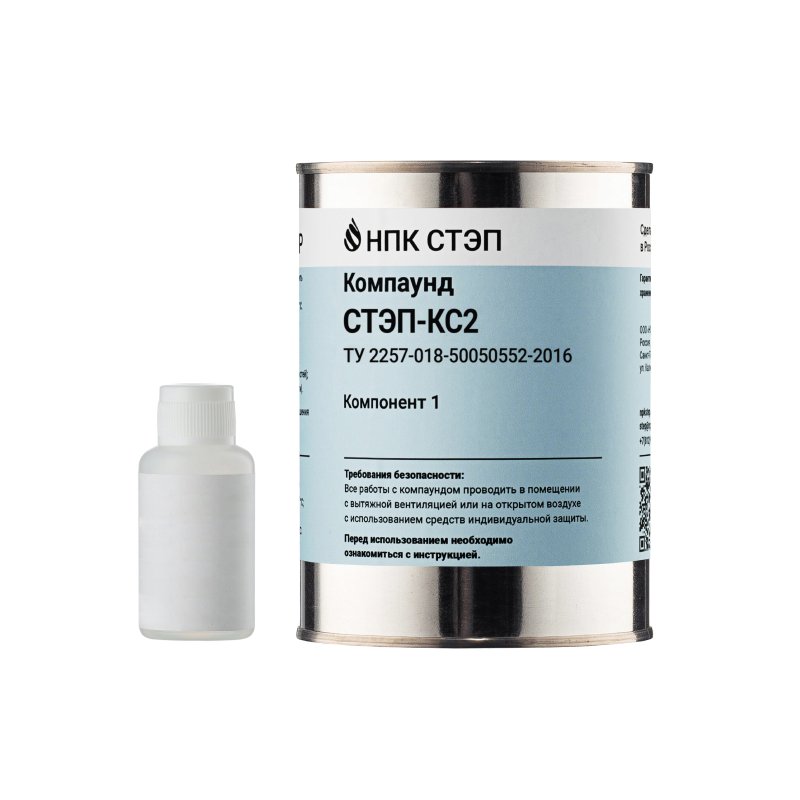
STEP-KS2 is a flame-retardant modification of the STEP-KS1 silicone compound. This two-component, room-temperature-curing material is intended for potting and sealing electronic and electromechanical assemblies that require environmental protection and a flame-retardant material.
The low-viscosity mixture flows into small gaps and follows the geometry of the assembly. It cures with minimal shrinkage. The cured material can be mechanically removed where access for repair or maintenance is needed.
Key Benefits
- Flame-retardant formulation; the source specification reports UL 94 V-0 classification.
- Low viscosity for filling narrow gaps.
- Room-temperature curing, with an accelerated elevated-temperature option.
- Minimal curing shrinkage.
- Mechanically removable for repairable assemblies.
- Operating temperature range stated in the product description: -60°C to +250°C; technical table lists -60°C to +200°C. Confirm the applicable limit with the manufacturer before use.
Typical Applications
- Potting of microchips and electronic components.
- Sealing coils and electrical connectors.
- Protection of electronic, instrumentation and electromechanical assemblies.
- Repairable electronic devices where flame-retardant potting is required.
Technical Specifications
| Material | Two-component silicone |
|---|---|
| Mixed appearance | Low-viscosity liquid, white to light beige |
| Mixing ratio | 100:2 |
| Working time | At least 20 min at 20 ± 2°C |
| Brookfield dynamic viscosity | 8,000–10,000 mPa·s at 23°C |
| Density | 1.35 ± 0.05 g/cm³ |
| Technological cure | 12–16 h at 20–35°C |
| Cold cure schedule | 24 h at 15–35°C |
| Tensile strength | 0.25–0.30 MPa |
| Elongation at break | 40–50% |
| Relative permittivity at 1 MHz | 2.7–3.2 |
| Hardness | 45–50 Shore A |
| Flammability classification | UL 94 V-0 (as stated by source) |
| Operating temperature in technical table | -60°C to +200°C |
Important technical clarification: The source page gives two different upper operating-temperature limits (+250°C in the feature list and +200°C in the technical table). The CSV preserves this discrepancy transparently; please confirm the correct value with the manufacturer before publishing a definitive claim. Verify the UL 94 classification and applicable test documentation before making compliance claims in target markets.
Reviews
There are no reviews yet.